Burntide Official Website › Blog › Milligrams or millilitres
Milligrams Or Millilitres: Converting A Vinegar Dose
- Vinegar trials dose in millilitres of liquid. Gummy and capsule labels print milligrams of a dried ingredient. The two are not the same unit and not the same material.
- A tablespoon is 15 mL, weighs roughly 15 g, and at about 5 per cent acidity carries roughly 750 mg of acetic acid.
- A whole 525 mg blend is below that figure, and it is shared with three ketone salts.
- The conversion breaks down because a dried vinegar ingredient has no published acidity and may be a powder on a carrier rather than concentrated vinegar.
- Where a conversion is uncertain, the honest move is a range and a caveat, not a confident number.
Two units, two different things
Open any paper on apple cider vinegar and the dose will be in millilitres. Open any gummy or capsule label and the amount will be in milligrams. That mismatch is the single largest source of confusion in this corner of the supplement shelf, and it is almost never addressed.
A millilitre is a volume. A milligram is a mass. Converting between them needs a density, and converting between liquid vinegar and dried vinegar ingredient needs something more: a statement of what the dried material actually is. Labels rarely supply one.
So the conversion below is a method with a warning attached, and the warning is the more useful half.

The conversion, step by step
Here is the arithmetic in full, so it can be checked rather than taken on trust.
| Step | Figure | Where it comes from |
|---|---|---|
| A tablespoon of vinegar | 15 mL | Standard US tablespoon |
| Density of vinegar | close to water, about 1.0 g/mL | Vinegar is mostly water |
| So a tablespoon weighs | about 15 g, which is 15,000 mg | Volume times density |
| Typical table vinegar acidity | about 5 per cent acetic acid by volume | Standard for grocery cider vinegar |
| Acetic acid in a tablespoon | roughly 750 mg | 5 per cent of 15,000 mg |
| Two tablespoons, the higher trial arm | about 1,500 mg of acetic acid | Twice the above |
That gives the number this website uses throughout: 750 to 1,500 mg of acetic acid a day for the 15 to 30 mL arms used in the trials. It is a round figure and it is stated as one.
Notice what has been converted. Not “a tablespoon equals 15,000 mg of vinegar”, which is true but useless, because most of that mass is water. The useful conversion is to the active component, which is the acid.
Where the conversion breaks down
Three things stop the arithmetic above from being applied cleanly to a supplement label, and all three are worth knowing before anyone quotes a conversion at you.
- Dried vinegar is not concentrated vinegar. Making a powder means spraying vinegar onto a carrier such as maltodextrin and drying it. The resulting powder may be a small fraction acetic acid by weight, and the label does not say what fraction.
- Acidity is not declared. No supplement label this desk has seen prints the acetic acid content of its vinegar ingredient. That is the one number that would make a comparison possible, and it is absent.
- A blend hides the split. Even with an acidity figure, an ingredient inside a proprietary blend has no weight of its own. US labelling rules permit the total alone.
Put those together and the honest position is this: for a supplement that does not publish its vinegar amount or its acidity, no exact conversion is possible. What remains possible is a ceiling argument, and a ceiling argument is enough when the gap is large.
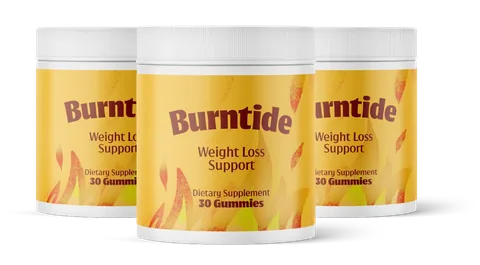
What the Burntide label prints instead
One Proprietary Blend at 525 mg covering apple cider vinegar and three ketone salts, with no split published. The ceiling is on the jar and on this website.
Price shown at checkout · 60-day guarantee
Order Burntide On The Official WebsiteWhat the vinegar trials actually used
Worth setting out plainly, because these studies are quoted constantly and read rarely.
| Study | What was given | What was measured |
|---|---|---|
| Kondo 2009 | 15 or 30 mL of vinegar daily for 12 weeks | Body weight, body fat mass and serum triglycerides |
| Ostman 2005 | Vinegar with a bread meal, acute | Glucose and insulin response, and reported satiety |
| Johnston 2004 | Vinegar with a high-carbohydrate meal, acute | Insulin sensitivity in insulin resistance and type 2 diabetes |
| Launholt 2020 | A systematic review of the above and others | Safety, side effects, metabolic parameters and body weight |
| Arjmandfard 2025 | A dose-response meta-analysis in type 2 diabetes | Glycaemic control and insulin sensitivity by dose |
Every one of those is liquid vinegar, taken with or near food, in millilitres. The 2025 meta-analysis is the one that matters most for this discussion, because a dose-response finding is precisely what makes an undeclared amount a problem: if the effect depends on how much you take, then not knowing how much you are taking is disqualifying.
The 2020 review is the sober one. It concluded that the evidence base is small and mixed, which is the correct summary of a literature built on short studies with modest numbers of participants.
Applying it to a label with a blend on it
Here is the method applied to the Burntide panel, showing every step including the ones where the answer is “unknown”.
| Question | Answer from the label | Confidence |
|---|---|---|
| How much vinegar ingredient is in a gummy? | Not published. Inside a blend | Certain that it is not published |
| What is the maximum it could be? | 525 mg, the whole blend | Certain. A ceiling is a hard constraint |
| Is it the largest item in the blend? | Yes, it is listed first | Certain, from the descending-order rule |
| What is its acetic acid content? | Not published anywhere | Certain that it is unknown |
| Could it supply 750 mg of acetic acid? | No. That would require the whole blend to be more than acid by weight | High confidence |
| So how does it compare with a tablespoon? | Below it, and by a margin large enough that the unknowns do not close it | High confidence |
That last row is the whole conclusion. The unknowns are real and they are not large enough to change the answer, because the gap is a factor of several rather than a few per cent.
This is what a ceiling argument buys you: a defensible conclusion from an incomplete label. The proprietary blends guide sets out the general version of the method.
What an honest statement looks like
Three ways of saying the same thing, only one of which a label supports.
- Wrong: “contains 525 mg of apple cider vinegar”. It treats the ceiling as the amount, and it ignores the three ketone salts sharing the figure.
- Also wrong: “contains the equivalent of a tablespoon of vinegar”. It converts a number nobody has published into a number nobody has measured.
- Right: “apple cider vinegar sits inside a 525 mg blend with three ketone salts. The split is not published, so no more than 525 mg of it is vinegar, and the trials used 15 to 30 mL of liquid vinegar a day.”
The third is longer and it is the only one that survives being checked. Every page on this website uses that construction, which is why the phrase “not published” appears so often on the actives and amounts page.
The same problem on three other ingredients
Vinegar is the clearest case but it is not the only one, and recognising the pattern is worth more than memorising this example.
| Ingredient | How the research measures it | How labels usually print it | The gap |
|---|---|---|---|
| Apple cider vinegar | millilitres of liquid | milligrams of a dried ingredient | No acidity declared, so no clean conversion |
| Exogenous ketones | grams of salt or ester in a drink | milligrams inside a blend | Three orders of magnitude, and the split is usually hidden |
| Herbal extracts | grams of dried herb, or a named extract ratio | milligrams of extract | A 10:1 extract at 100 mg is not 100 mg of herb |
| Fish oil | grams of EPA and DHA | milligrams of oil | The oil weight is not the active weight |
The pattern in every row is the same. The research measures the thing that acts; the label measures the material it arrives in. Whenever those two differ, a number on a jar cannot be compared against a number in a paper without a conversion factor the label does not supply.
The defence is the same in every case too: find the ceiling, compare the ceiling, and refuse to invent the middle step. If the ceiling is comfortably above the research dose, the unknowns matter. If it is far below, they do not.
If what you want is the research dose
Then buy vinegar. This is a supplement website saying so, and it is worth saying.
A bottle of apple cider vinegar from a grocery shelf costs a few dollars and holds a hundred tablespoons or more. It is the exact form and the exact amount every study in the table above used. Nothing in a gummy improves on that.
What a gummy improves on is compliance and taste. Two tablespoons of vinegar a day is unpleasant, hard on enamel, and something most people abandon within a fortnight. A chewable attached to a meal is easy to keep up for months, and a supplement nobody takes has a dose of zero.
That is the actual trade and it is a real one. Whether it is worth the price difference is your decision, and the pricing page makes the same comparison rather than hiding it. If you do take vinegar in liquid form, dilute it, drink it with food and rinse afterwards, because acid on enamel is the one genuine risk in this whole discussion.
Sources cited in this post
- Kondo T, Kishi M, Fushimi T, Ugajin S, Kaga T. Vinegar intake reduces body weight, body fat mass, and serum triglyceride levels in obese Japanese subjects. Biosci Biotechnol Biochem. 2009;73(8):1837-43. PMID 19661687. https://pubmed.ncbi.nlm.nih.gov/19661687/
- Ostman E, Granfeldt Y, Persson L, Bjorck I. Vinegar supplementation lowers glucose and insulin responses and increases satiety after a bread meal in healthy subjects. Eur J Clin Nutr. 2005;59(9):983-8. PMID 16015276. https://pubmed.ncbi.nlm.nih.gov/16015276/
- Johnston CS, Kim CM, Buller AJ. Vinegar improves insulin sensitivity to a high-carbohydrate meal in subjects with insulin resistance or type 2 diabetes. Diabetes Care. 2004;27(1):281-2. PMID 14694010. https://pubmed.ncbi.nlm.nih.gov/14694010/
- Launholt TL, Kristiansen CB, Hjorth P. Safety and side effects of apple vinegar intake and its effect on metabolic parameters and body weight: a systematic review. Eur J Nutr. 2020;59(6):2273-2289. PMID 32170375. https://pubmed.ncbi.nlm.nih.gov/32170375/
- Arjmandfard D, Behzadi M, Sohrabi Z, et al. Effects of apple cider vinegar on glycemic control and insulin sensitivity in patients with type 2 diabetes: a GRADE-assessed systematic review and dose-response meta-analysis of controlled clinical trials. Front Nutr. 2025;12:1528383. PMID 39949546. https://pubmed.ncbi.nlm.nih.gov/39949546/
- U.S. Food and Drug Administration. Dietary Supplement Labeling Guide. https://www.fda.gov/food/dietary-supplements-guidance-documents-regulatory-information/dietary-supplement-labeling-guide

Every page, every journal post, the bottle facts and the ingredients go through review by Dr. Wendy Scinta, MD before they ship. We write from the Burntide label, the Supplement Facts panel photographed on the jar, and the distributor’s own paperwork. Sources are linked inline and every one was opened before it was cited. Where a figure is not disclosed we print “not published” rather than estimating it, and where we do arithmetic we show the working and name the assumption. Corrections go to [email protected] and move the date at the top of this post.