Burntide Official Website › Proprietary Blends Guide
Proprietary blends: reading a label that does not print its amounts
A proprietary blend is a group of ingredients declared on a Supplement Facts panel as one total weight rather than individually. It is legal, it is common, and it means the label will not tell you how much of any single ingredient you are getting. What it does give you is a ceiling and an order, and those two facts go further than most people expect.
How the rule works, what you can still deduce, a worked example, and three questions to ask a seller who will not publish a split.
What a proprietary blend is, in labelling terms
Open a Supplement Facts panel and most rows carry a name, an amount and a percentage. Then somewhere below the vitamins and minerals you will find a row in bold with a single weight beside it and a list of ingredients underneath, indented and unweighted. That is a proprietary blend.
The manufacturer is declaring that the named ingredients, taken together, weigh what the bold figure says. It is not declaring how that weight divides between them, and under United States labelling rules it does not have to.
The FDA Dietary Supplement Labeling Guide sets out the requirements. Two of them matter to a reader: the total must be declared, and the ingredients inside the blend must be listed in descending order of predominance by weight. Those two rules are the entire toolkit a label gives you, and they are more useful than they look.
Why a manufacturer uses one
Two reasons are usually given and one is usually the real one.
The reason that is offered: formulation secrecy. A manufacturer that has spent money arriving at a particular ratio does not want a competitor to copy it off the back of the jar. This is a genuine commercial concern and it is not dishonest.
The reason that is usually operating: the numbers are unimpressive. If a blend contains a headline ingredient at a fraction of the amount used in the research that made it famous, publishing the split invites exactly that comparison. A single total avoids it. This is legal, it is extremely widespread, and it is why a blend on a label should raise your attention rather than settle it.
There is a third possibility worth naming for fairness: some blends are small because the ingredient is potent at a small amount. That is true of a handful of ingredients and false of most, and the way to tell is to look up what the research used. That is the whole of the method in this guide.
What a blend total does and does not tell you
| What you might want to know | Can the label tell you? | Why |
|---|---|---|
| The total weight | Yes | It is printed in bold. This is the single most useful number on the panel |
| The maximum any one ingredient can be | Yes | It is the total. Nothing inside a blend can weigh more than the blend |
| Which ingredient is the largest | Yes | The first one listed, because the order is by descending weight |
| Which ingredient is the smallest | Yes | The last one listed |
| How much of the first ingredient there is | No | Anywhere from just over a share to almost all of the total |
| Whether any ingredient is present at a meaningful amount | No | A blend can be legally correct with a trace of everything after the first item |
| What preparation or extract ratio was used | Usually no | A label rarely distinguishes a dried extract from a powder unless it chooses to |
| Whether the blend was assayed | No | A panel is a declaration, not a test result |
Four yeses and four noes, and the four yeses are worth more than most people realise. A blend total is a hard ceiling, and a ceiling is enough to settle a surprising number of questions.
The ceiling method, in six steps
Here is the method, in four steps, on any blend on any label.
Write down the total
The bold figure. Everything else follows from it, and it is the number to carry into every comparison you make.
Note the first ingredient
It is the heaviest item in the blend. If the blend is named after an ingredient that is not first, that is worth noticing.
Look up what the research used
Search the ingredient name with “randomised trial” or “systematic review”. Write down the dose the study used, in the unit the study used.
Compare the research dose against the whole blend
Not against your guess at the split. Against the total, which is the ceiling. If the total is below the research dose, no split can rescue it.
Check the units before you conclude anything
This is where people go wrong. Milligrams against grams is a thousandfold difference, and milligrams of a dried ingredient against millilitres of a liquid is not a comparison at all until you convert it.
Decide what the ceiling permits
If the ceiling is far below the research dose, the honest conclusion is that the product has not been shown to do what the research showed. That is a conclusion, not an accusation.
The whole method takes about five minutes and needs nothing but the jar and a search engine. It is the single most useful skill in this category.
A worked example on a 525 mg blend
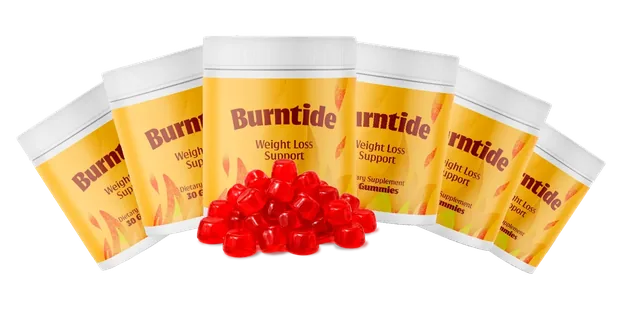
Take a real one. The panel on the Burntide jar this website sells prints a Proprietary Blend at 525 mg, containing apple cider vinegar and BHB calcium, magnesium and sodium.
Step one, the total: 525 mg.
Step two, the first ingredient: apple cider vinegar, so it outweighs the three ketone salts combined.
Step three, the research: the vinegar trials used liquid vinegar at 15 to 30 mL a day, which is roughly 750 to 1,500 mg of acetic acid (Kondo 2009, Ostman 2005). The ketone work used drinks measured in grams, typically 10 to 25 g (Stubbs 2017, Stubbs 2018).
Step four, the comparison: 525 mg is the ceiling for both ingredients together. It is below the acetic acid in a single tablespoon of vinegar, and it is roughly one twentieth of the smallest ketone dose in that literature.
Step five, the units: the vinegar figure needs care. 15 mL of liquid vinegar is not 15 mg of anything, and a dried vinegar ingredient is a different material from the liquid used in the trials. The conclusion holds anyway, because the gap is large enough to survive the uncertainty.
Step six, what the ceiling permits: no claim that this product reproduces those findings. What it permits is the product being what it is, which is a daily routine at a small amount, and that is what the mechanism page says.
Note what the method did not require. No guess at the split, no access to the formulation, and no cooperation from the manufacturer. The ceiling did all the work.
Three questions for a seller who will not publish a split
If you can reach a seller, three questions separate the ones worth buying from from the ones that are not. None of them is aggressive and all three have correct answers.
1. What is the amount of the headline ingredient? A seller who knows will either tell you or say plainly that the manufacturer does not publish it. A seller who gives you a number that is not on the label has either been told something you have not, in which case ask for it in writing, or is improvising.
2. Which preparation is it? Dried, powdered, extract, and at what ratio. The answer is often “we do not have that”, which is honest and tells you the label is the whole of the information available.
3. Is there a certificate of analysis, and from which laboratory? A named laboratory, a method and a date is the only document that turns a declaration into a measurement. “We do not hold one” is a real answer. The NIH consumer guidance makes the same point about third-party testing.
What you are testing with all three is not the product. It is whether the person selling it distinguishes between what they know and what they are guessing, and that distinction is the best single predictor of whether the rest of what they tell you is reliable.
Two mistakes people make reading a blend
Two mistakes are extremely common when people first learn to read a blend, and both produce the wrong conclusion.
Dividing the total by the number of ingredients. A 525 mg blend of four ingredients is not 131 mg each. The rule is descending order, not equal shares, and a blend can legally be 520 mg of the first item and a trace of the rest. Any estimate that assumes equal shares is inventing information.
Treating the ceiling as the amount. The reverse error. Saying “it contains 525 mg of apple cider vinegar” because vinegar is the first item is also inventing information. The correct sentence is “no more than 525 mg”, and it is the only one a label supports.
Both errors come from the same place: a discomfort with not knowing. A blend is a label declining to tell you something, and the honest response is to say so rather than to fill the gap with arithmetic that has no basis. That is the rule this whole website runs on, and it is why the panel page prints “not published” wherever a split would have to be guessed.
Research behind this Burntide page
Every source below was opened and checked, and every PubMed record was confirmed against the NCBI record before it was written down. None of them studied Burntide itself. They concern the ingredients, at the amounts the researchers used.
- U.S. Food and Drug Administration. Dietary Supplement Labeling Guide. https://www.fda.gov/food/dietary-supplements-guidance-documents-regulatory-information/dietary-supplement-labeling-guide
- Kondo T, Kishi M, Fushimi T, Ugajin S, Kaga T. Vinegar intake reduces body weight, body fat mass, and serum triglyceride levels in obese Japanese subjects. Biosci Biotechnol Biochem. 2009;73(8):1837-43. PMID 19661687. https://pubmed.ncbi.nlm.nih.gov/19661687/
- Ostman E, Granfeldt Y, Persson L, Bjorck I. Vinegar supplementation lowers glucose and insulin responses and increases satiety after a bread meal in healthy subjects. Eur J Clin Nutr. 2005;59(9):983-8. PMID 16015276. https://pubmed.ncbi.nlm.nih.gov/16015276/
- Stubbs BJ, Cox PJ, Evans RD, et al. On the metabolism of exogenous ketones in humans. Front Physiol. 2017;8:848. PMID 29163194. https://pubmed.ncbi.nlm.nih.gov/29163194/
- Stubbs BJ, Cox PJ, Evans RD, Cyranka M, Clarke K, de Wet H. A ketone ester drink lowers human ghrelin and appetite. Obesity (Silver Spring). 2018;26(2):269-273. PMID 29105987. https://pubmed.ncbi.nlm.nih.gov/29105987/
- National Institutes of Health, Office of Dietary Supplements. Dietary Supplements: What You Need to Know. https://ods.od.nih.gov/factsheets/WYNTK-Consumer/
- U.S. Food and Drug Administration. Questions and Answers on Dietary Supplements. https://www.fda.gov/food/information-consumers-using-dietary-supplements/questions-and-answers-dietary-supplements
- U.S. National Library of Medicine, MedlinePlus. Dietary Supplements. https://medlineplus.gov/dietarysupplements.html

Every page, every journal post, the bottle facts and the ingredients go through review by Dr. Wendy Scinta, MD before they ship. We write these pages from the Burntide Supplement Facts panel photographed on the jar and from the distributor’s own paperwork. Every amount you read here is one the label prints. Apple cider vinegar and the BHB salts have no amount of their own, because they share one 525 mg blend figure, and we print “not published” for those rather than estimating a split. Research is cited by author, year and PubMed record, at the amounts the researchers used. Where a piece of the manufacturer’s own artwork reaches further than the panel does, this desk marks it on the page rather than reprinting it. Corrections are made on the page itself and the review date moves forward. Write to [email protected]. Last reviewed September 2026 by Dr. Wendy Scinta, MD.
More Burntide label reading
Order Burntide on the official website
A 525 mg blend, printed as a ceiling rather than dressed up as a dose.
Price and pack sizes are shown on the checkout page
Order Burntide On The Official WebsiteOne gummy a day · 30 per jar · 60-day money-back guarantee · lot BUR-26/BU-8141