Burntide Official Website › Blog › Two grams of sugar a day
Two Grams Of Sugar A Day: What A Supplement Gummy Adds
- One Burntide gummy carries 2 g of total sugars, of which 1 g is added sugar, at 2 per cent of the added-sugar Daily Value.
- Over a 30-gummy jar that is 60 g of total sugars and 30 g of added sugar.
- A teaspoon of sugar is about 4 g, so one gummy is roughly half a teaspoon.
- The sugar is structural. A pectin gel needs it, and there is no artificial sweetener or sugar alcohol on this label to replace it.
- It matters most on a weight-support product, which is exactly why it is printed here rather than left on the panel for you to find.
What the panel says about sugar
Four rows on the Burntide Supplement Facts panel describe what a gummy contributes nutritionally, and three of them are about carbohydrate.
| Row | Per gummy | Daily Value | What it means |
|---|---|---|---|
| Calories | 8 | – | Almost all of it from the sweeteners |
| Total Carbohydrate | 2 g | 1% | Essentially all of it sugar |
| Total Sugars | 2 g | no Daily Value established | Naturally occurring plus added, together |
| Includes Added Sugars | 1 g | 2% | The share a manufacturer put in deliberately |
Two grams of sugar and eight calories is a small entry by any measure. It is printed plainly on the jar and this website has no interest in inflating it. What it is worth doing is multiplying it out, because one gummy is not how anybody takes this.
What it adds over a jar, and over six
| How much you take | Days | Total sugars | Added sugars | In teaspoons of sugar |
|---|---|---|---|---|
| 1 gummy | 1 | 2 g | 1 g | about half a teaspoon |
| 1 jar | 30 | 60 g | 30 g | about 15 teaspoons of total sugars |
| 3 jars | 90 | 180 g | 90 g | about 45 teaspoons |
| 6 jars | 180 | 360 g | 180 g | about 90 teaspoons |
Written that way it looks larger, and both framings are true. Ninety teaspoons of sugar sounds alarming; spread across a hundred and eighty days it is half a teaspoon a day, which is not.
The useful framing is the daily one, because that is how it is consumed. The jar-level figures are here because people do reach for them, and it is better to do the multiplication honestly than to leave it to somebody with an axe to grind.
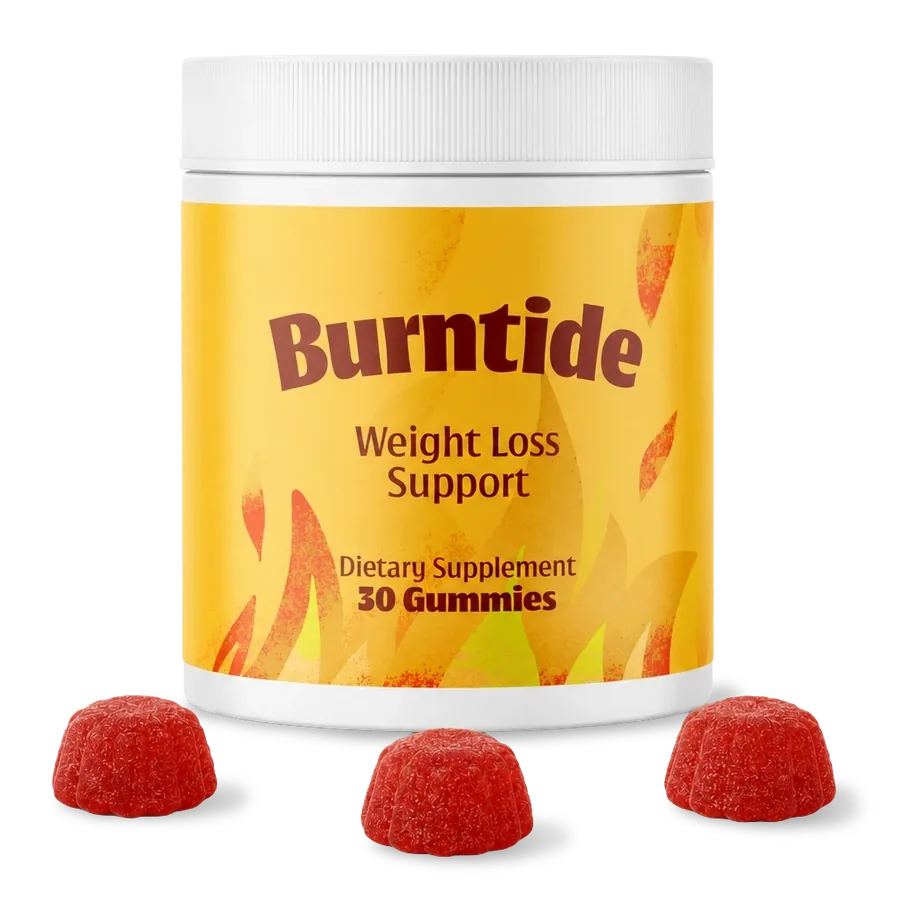
Why a gummy needs sugar at all
This is not a formulation shortcut. Sugar does three jobs in a pectin gummy and at least two of them are hard to replace.
- It sets the gel. Pectin gels in the presence of sugar and acid at the right concentrations. Remove the sugar and the pectin needs a different system entirely.
- It carries the taste. Dried vinegar and mineral salts are sour and bitter. Something has to cover them, and sweetness is the cheapest and most reliable cover.
- It gives the gummy its texture. Chewiness comes from the sugar concentration as much as from the gelling agent.
Manufacturers who want a low-sugar gummy usually reach for sugar alcohols such as maltitol, sorbitol or xylitol, or for artificial sweeteners. Neither appears on this label. The Other Ingredients line names corn syrup and pure cane sugar and no sweetener of any other kind, which is a formulation choice with a visible cost on the panel.
The whole Burntide panel, printed in full
Every row on the jar, including both sugar rows, read one at a time on this website before you buy anything.
Price shown at checkout · 60-day guarantee
Order Burntide On The Official WebsiteAdded sugars and total sugars are different rows
The panel prints both and the difference confuses people.
Total sugars is everything: sugar naturally present in an ingredient plus anything added. It carries a dagger, because no Daily Value has been set for total sugars.
Includes added sugars is the subset a manufacturer put in deliberately, and it does carry a Daily Value, set at 50 g a day. The FDA labelling guide sets out the requirement and the reference.
On this panel the two figures are 2 g and 1 g, so half the sugar in a gummy is added and half arrives with something else. The most likely source of the naturally occurring half is the apple pectin and the fruit-derived components.
The reason the distinction exists at all is that public health guidance is about added sugars rather than about sugar in fruit. A row that reads 2 g total and 1 g added is telling you which half is which, and it is a genuinely useful piece of labelling. The panel page explains the rest of the symbols.
When two grams a day actually matters
Four situations where this row is worth acting on, and one where it is not.
| If this is you | Does 2 g a day matter? | Why |
|---|---|---|
| Tracking added sugar to the gram | Yes | 1 g a day is a real entry in a log, even if it is a small one |
| Managing diabetes with a clinician | Worth mentioning | Not for the two grams, but because the whole product is worth mentioning |
| On a very low carbohydrate diet | Possibly | 2 g of carbohydrate will not end a state of ketosis on its own, and if you are counting to single figures you should know it is there |
| Concerned about teeth | Yes | A sugary, acidic chewable sits on the enamel. Rinse with water, which the label already tells you to drink |
| Eating an ordinary mixed diet | Not really | Half a teaspoon a day against everything else you eat is not the variable to optimise |
The honest summary of that table is that the last row covers most readers. The reason the sugar row is worth printing anyway is the fourth one and the first one, and because a product whose front label says weight loss support ought to be upfront about the sugar in it rather than leaving it for a sceptic to find.
The NIH fact sheet on weight-loss supplements is the neutral read on how much any of this moves a scale, and its answer for the category as a whole is: not much. A review of obesity supplements reaches the same place.
What the alternatives cost you
Every route to less sugar in a chewable has a trade attached.
- Sugar alcohols. Maltitol, sorbitol and xylitol cut the sugar figure and bring a laxative effect at higher intakes. Plenty of people find gummies made with them uncomfortable.
- Artificial sweeteners. Sucralose and acesulfame work in a gel and are avoided by some buyers on preference. They also do not help the gel set, so pectin systems need reformulating around them.
- A capsule. No sugar at all, a higher possible dose, and nothing to look forward to. This is the real alternative and it is a good one if swallowing capsules does not bother you.
- Liquid vinegar. No added sugar, the cheapest option by an enormous margin, the form the research used, and the hardest to keep up.
Written out like that, two grams of sugar looks like a reasonable price for a chewable somebody will actually take. That is the case for this format and it is a fair one.
The one place the sugar and the acid meet
Sugar on its own is a dietary question. Sugar plus acid, chewed, is a dental one, and it is the single most practical consequence of this whole page.
A Burntide gummy carries two grams of sugar, citric acid, and dried apple cider vinegar. It is chewed rather than swallowed, so it spends time in contact with enamel, and it is sticky enough to stay in the grooves of a molar afterwards. Every one of those is an ordinary property of a gummy and together they are worth one habit.
- Drink the glass of water the label already tells you to drink, and drink it after rather than before. It rinses both the sugar and the acid off.
- Do not brush immediately. Brushing enamel that has just been exposed to acid is worse than waiting. Half an hour is the usual advice.
- Take it with a meal window rather than as a snack. Saliva flow is higher around a meal, which is the body’s own defence.
- If you already have thin enamel or erosion, raise it with a dentist before adding any daily acidic chewable to a routine.
None of that is alarming and none of it is unique to this product. It applies to every gummy vitamin, every chewable and most fruit. It is on this page because the label instruction about a full glass of water is usually read as a swallowing aid, and it is doing more work than that.
The honest verdict on this row
Two grams of total sugars and one gram of added sugar a day is small, declared, and structurally necessary in a pectin gummy with no artificial sweetener in it. For most readers it is not a reason to buy or not to buy.
It belongs on this website anyway, for two reasons. It is on a product sold for weight support, where any added sugar invites a fair question. And it is the kind of number that gets left off a marketing page and then found by a reader, at which point it costs far more trust than printing it ever would.
Every figure on this page is on the jar. The FDA's consumer page and MedlinePlus are the neutral background if you want to read further, and the actives and amounts page handles the rest of the label.
Sources cited in this post
- U.S. Food and Drug Administration. Dietary Supplement Labeling Guide. https://www.fda.gov/food/dietary-supplements-guidance-documents-regulatory-information/dietary-supplement-labeling-guide
- National Institutes of Health, Office of Dietary Supplements. Dietary Supplements for Weight Loss: Fact Sheet for Health Professionals. https://ods.od.nih.gov/factsheets/WeightLoss-HealthProfessional/
- U.S. Food and Drug Administration. Questions and Answers on Dietary Supplements. https://www.fda.gov/food/information-consumers-using-dietary-supplements/questions-and-answers-dietary-supplements
- U.S. National Library of Medicine, MedlinePlus. Dietary Supplements. https://medlineplus.gov/dietarysupplements.html
- Rios-Hoyo A, Gutierrez-Salmean G. New dietary supplements for obesity: what we currently know. Curr Obes Rep. 2016;5(2):262-70. PMID 27053066. https://pubmed.ncbi.nlm.nih.gov/27053066/
- Gambon DL, Brand HS, Veerman EC. [Unhealthy weight loss. Erosion by apple cider vinegar]. Ned Tijdschr Tandheelkd. 2012;119(12):589-91. PMID 23373303. https://pubmed.ncbi.nlm.nih.gov/23373303/

Every page, every journal post, the bottle facts and the ingredients go through review by Dr. Wendy Scinta, MD before they ship. We write from the Burntide label, the Supplement Facts panel photographed on the jar, and the distributor’s own paperwork. Sources are linked inline and every one was opened before it was cited. Where a figure is not disclosed we print “not published” rather than estimating it, and where we do arithmetic we show the working and name the assumption. Corrections go to [email protected] and move the date at the top of this post.